
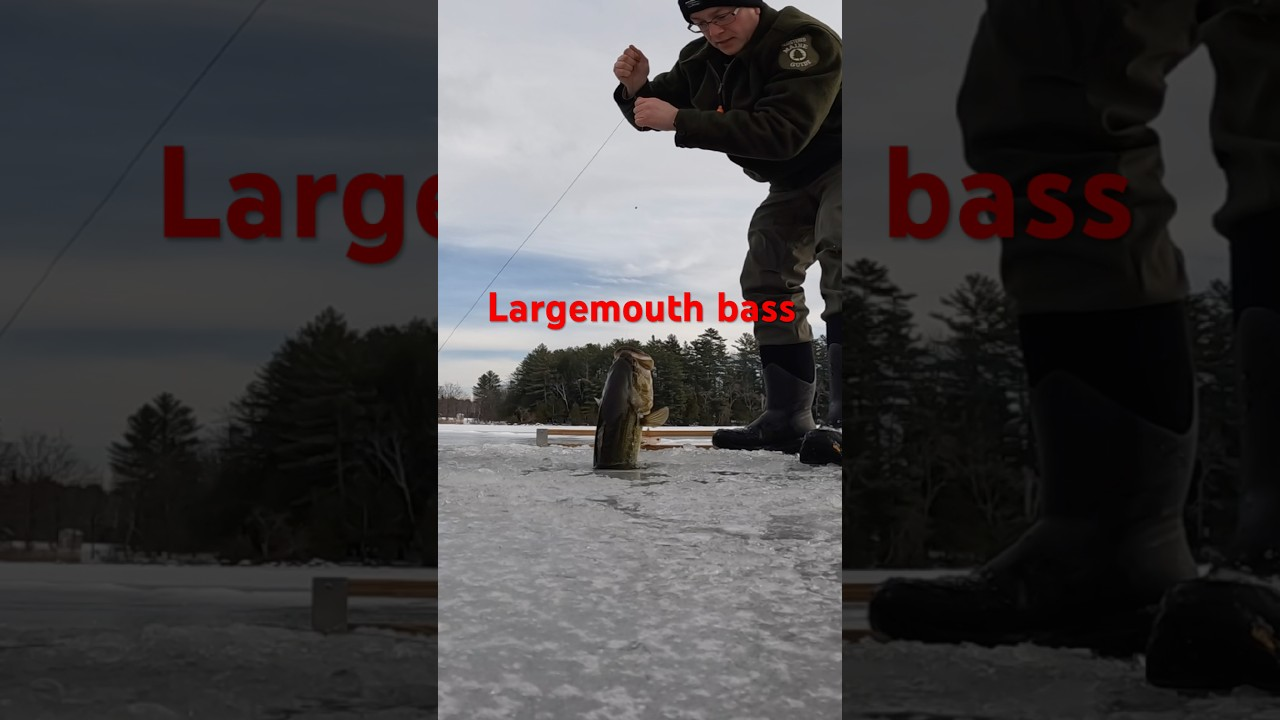
There is a specific kind of adrenaline that hits when you engage in largemouth bass ice fishing here in Central Maine. While many anglers flock to the hardwater chasing landlocked salmon or brook trout, the aggressive fight of a winter bucketmouth provides a heavy-hitting alternative that we absolutely love. When that flag pops and the spindle starts spinning, you never quite know if you’ve hooked a pickerel, a perch, or a monster bass.

Click the image above to watch the action unfold on the ice!
The Fight Under the Ice
As you can see in the video above, hauling a bass through the ice is a hands-on experience—literally. Unlike summer fishing with a rod and reel, largemouth bass ice fishing often involves hand-lining a tip-up. This connects you directly to the fish. You feel every head shake, every dive, and the sheer weight of the fish as you guide it toward the hole.
Winter bass tend to school up, so when we find one, we often find a few. However, their metabolism slows down significantly in the cold water. They aren’t going to chase a lure halfway across the lake like they do in July. Success on the hardwater requires patience, precision, and local knowledge of the underwater structure.
3 Keys to Hardwater Bass Success
Over our 30 years of guiding in the Maine North Woods and Central Maine, we’ve refined our tactics for pulling these green giants through the ice. If you are looking to replicate the success shown in our video, keep these factors in mind:
- Structure is King: In winter, largemouth bass relate heavily to remaining green weeds. We look for weed lines in 8 to 15 feet of water. If you can find a transition zone where the bottom changes from muck to rock near vegetation, you’re in the strike zone.
- Bait Selection: While we do plenty of fly fishing in the warmer months, winter is about live bait. A lively shiner suspended just above the weed tops is irresistible to a lethargic bass. They want a meal that offers high calories for low effort.
- Patience on the Set: When a bass takes the bait in cold water, they often mouth it slowly before swallowing. If you set the hook the second the flag goes up, you might miss him. Give the fish a moment to turn the bait.
Gear and Safety on Maine Heritage Waters
Before heading out, always check the ice thickness. Conditions can change rapidly, and safety is paramount whether you are on a solo trip or one of our guided nature hikes across the frozen landscape. We recommend checking the latest regulations and safety reports with the Maine Dept of Inland Fisheries & Wildlife.
For gear, we rely on tip-ups that can withstand the freezing temperatures without seizing up. Using a fluorocarbon leader is also critical; the water is often clearer in winter, and bass can be line-shy. Largemouth bass ice fishing demands attention to detail. One frayed knot or a frozen spool can mean the difference between a trophy photo and a story about “the one that got away.”
Why Hire a Guide for Winter Fishing?
Navigating the vast lakes of Central Maine can be daunting. Knowing exactly where the weed beds lie under two feet of ice and snow takes years of experience. Having a knowledgeable guide ensures you spend more time fishing and less time drilling empty holes.
We provide the shelter, the bait, and the knowledge. All you need to do is watch for the flags. There is nothing better than a meal on the ice while waiting for the next bite. It turns a freezing day into a comfortable, memorable adventure.
Book Your Hardwater Adventure
Are you ready to feel the weight of a Maine largemouth on a hand-line? Don’t let the winter season pass you by. At Thibodeau Outdoor Adventures, we live for these moments.
Comments are closed