Mastering compass basics is the single most important, non-negotiable skill for anyone heading into the Maine North Woods. I’ve seen it for over 30 years—folks trust their fancy GPS or phone, and when the batteries die or the signal disappears behind a ridge, they’re in a world of trouble. Technology is a great tool, but it’s a terrible master. Your compass, on the other hand, will never run out of power.

Your GPS is a Backup, Not a Lifeline
Think of it this way: out here, self-reliance isn’t just a point of pride; it’s a prerequisite for survival. Whether you’re on a multi-day moose hunt deep in the timber or tracking a buck through unfamiliar territory, your gear has to be foolproof. A simple baseplate compass is as reliable as the sunrise. It’s the foundation of all land navigation, and understanding these compass basics is what separates seasoned woodsmen from weekend warriors who might need a rescue.
Anatomy of a Compass: Know Your Tool
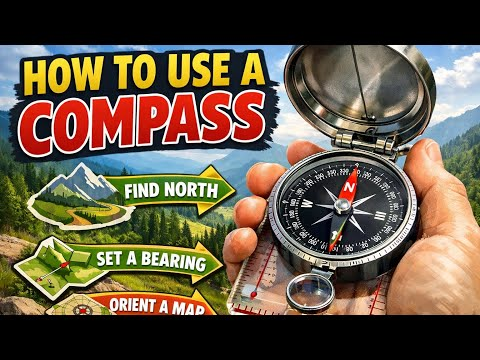
Before you can use it, you need to know what you’re looking at. In the video, we break it down piece by piece, but here’s a quick refresher on the essential parts of a good baseplate compass:
- Baseplate: The clear, plastic plate the compass is mounted on. It has your direction of travel arrow.
- Housing: The rotating circle (or bezel) marked with 360 degrees. You use this to set your bearing.
- Magnetic Needle: The heart of the compass. The red end always points to magnetic north.
- Direction of Travel Arrow: This is the arrow on the baseplate you point toward your destination.
Knowing these parts is the first step. The next is understanding the invisible force that makes it all work.
The Most Overlooked Detail: True North vs. Magnetic North
Here’s the part of compass basics that trips up most people: the Earth has two north poles. True North is the geographic top of the world. Magnetic North is what your compass needle points to, a spot up in northern Canada that wanders over time. The angle between them is called declination, and in Maine, it’s significant enough to put you miles off course if you ignore it.
When you’re tracking a whitetail on a guided deer hunting trip, being off by a few degrees can mean the difference between a successful harvest and a long, empty-handed walk back to camp. You must adjust for declination. You can find the current declination for your specific area on topographical maps or by checking with official sources like the Maine Dept of Inland Fisheries & Wildlife. This isn’t an optional step; it’s fundamental to accurate navigation.
Learning these compass basics isn’t just about reading a map. It’s about building the confidence to move through the wilderness safely and effectively, no matter what happens. It’s a skill we teach and reinforce on all our trips, from simple nature hikes to intense backcountry hunts.
Ready to build real-world confidence and leave the pavement behind? Our guided trips are the perfect opportunity to learn and apply these essential skills with an expert by your side. Book a Guided Nature Hike with us today and master the tools of the trade.
Comments are closed