

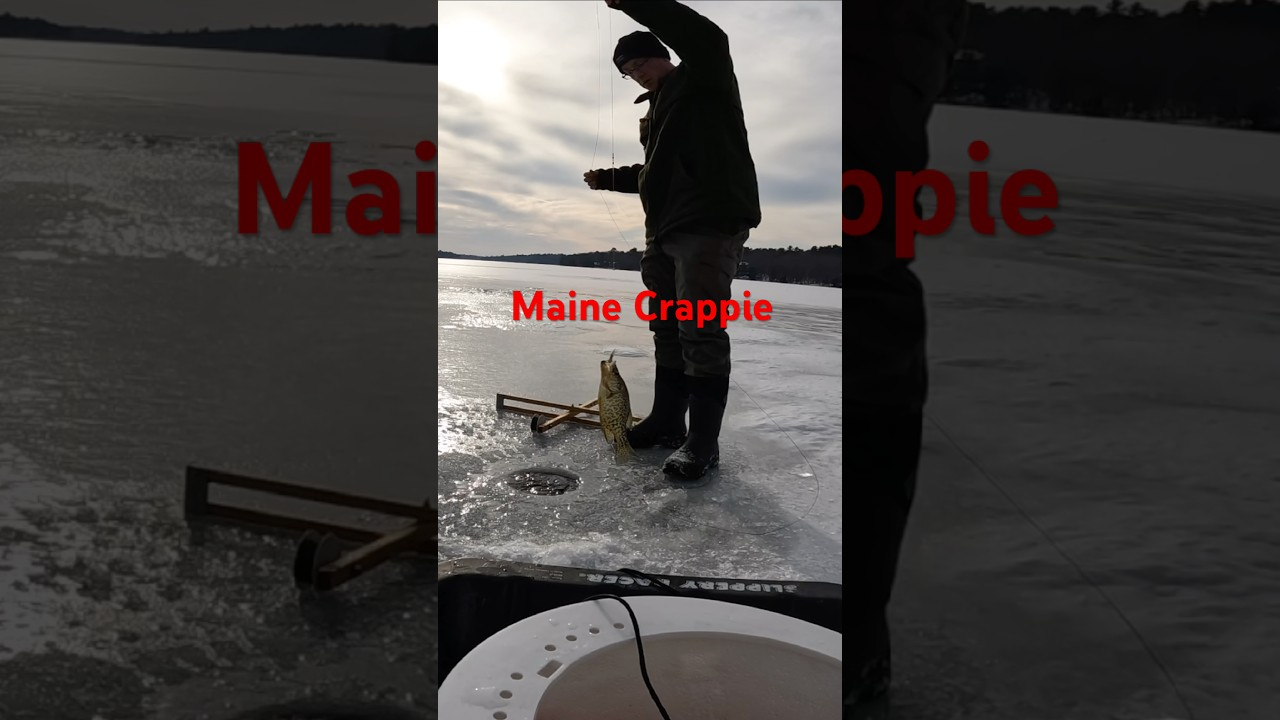
Mastering ice fishing for crappie is a skill that separates the casual angler from the dedicated hardwater fisherman, especially here in Central Maine. While many focus on trout or salmon, the challenge of locating a school of suspended slabs and coaxing them to bite offers a unique excitement that keeps us coming back to the frozen lakes year after year.
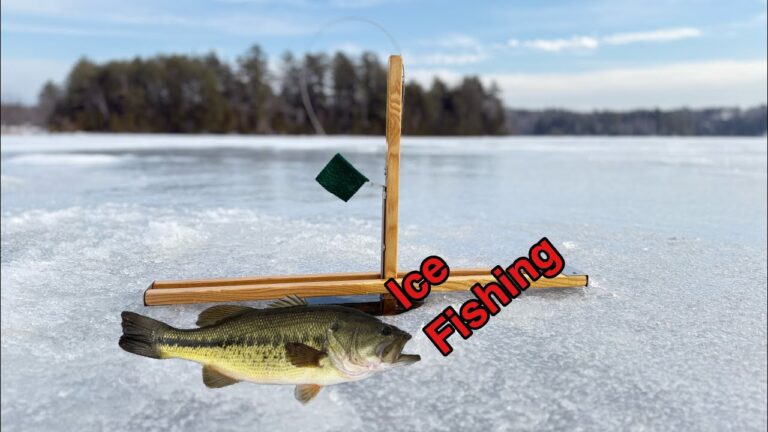
Click the image above to watch the short video of this catch!
Reading the Water and Finding the Fish
Unlike bottom-dwelling species, crappie are notorious for suspending in the water column. In the video above, you’ll see the result of patience and proper depth management. When we head out on our Maine guided ice fishing trips, we rely heavily on electronics to spot these fish. They often school up around submerged structures, weed lines, or drop-offs, anywhere from 10 to 30 feet deep.
Finding them is half the battle; getting them to commit is the other. Ice fishing for crappie requires finesse. These fish are often called “paper mouths” for a reason. Their biting mechanism is delicate, and if you rip the hook too hard, you’ll lose the fish before it ever reaches the hole. You need a sensitive rod tip to detect the subtle inhale of the bait, which often feels like nothing more than the lure becoming slightly weightless.
Gear Essentials for Success
You don’t need the heaviest gear in the shed to land these beautiful panfish. In fact, downsizing is usually the key to turning a slow day into a productive one. Here is what we recommend for a successful day on the ice:
- Micro Jigs: Tungsten jigs are superior because they are small but heavy, allowing them to punch through slush and get down to the strike zone quickly.
- Light Line: Use 2lb to 4lb test fluorocarbon. It’s invisible underwater and helps fool wary fish.
- Live Bait: Tipping your jig with a wax worm or a small minnow adds scent and natural movement that plastics sometimes lack.
- Electronics: A flasher or sonar unit is invaluable for seeing how fish react to your jigging cadence.
The Strategy: The Lift and Drop
As you can see in the clip, the action isn’t always aggressive. The most effective technique when ice fishing for crappie is a slow jigging cadence. We like to drop the jig just above the marked fish—crappie feed upward, and they will rarely chase a bait downward. A gentle lift and a slow quiver are often all it takes to trigger a strike.
It is also crucial to stay mobile. If you drill a hole and don’t mark fish within 15 minutes, it’s time to move. Maine’s winters are long, but the daylight is short, so efficiency is key. Always check the ice conditions before heading out; safety is paramount on the hardwater. For current regulations and safety tips, we always recommend checking with the Maine Department of Inland Fisheries & Wildlife.
Why We Love Winter Crappie Fishing
There is a distinct satisfaction in pulling a slab through an 8-inch hole in the ice. It’s a great way to introduce new anglers to the sport because the action can be fast and furious once you locate the school. Plus, they make for excellent table fare after a long, cold day outside.
Whether you are a seasoned veteran or looking to try ice fishing for crappie for the first time, having a guide can drastically shorten the learning curve. We know the waters, we have the gear, and we know where the fish hide.
Ready to experience the thrill of the hardwater season? Book your Guided Ice Fishing Trip with Thibodeau Outdoor Adventures today. Let’s get you on the ice and onto the fish.
From the Field
More From Our Guides
 The Unexpected Thrill of Landing a Winter Largemouth BassRead the article →
 The Unmistakable Thrill of Maine Ice Fishing for PickerelRead the article →
 Ice Fishing in Maine: A Guide to the Hardwater SeasonRead the article →
 Early Season Ice Fishing in Maine: First-Ice Safety and Fast ActionRead the article →