

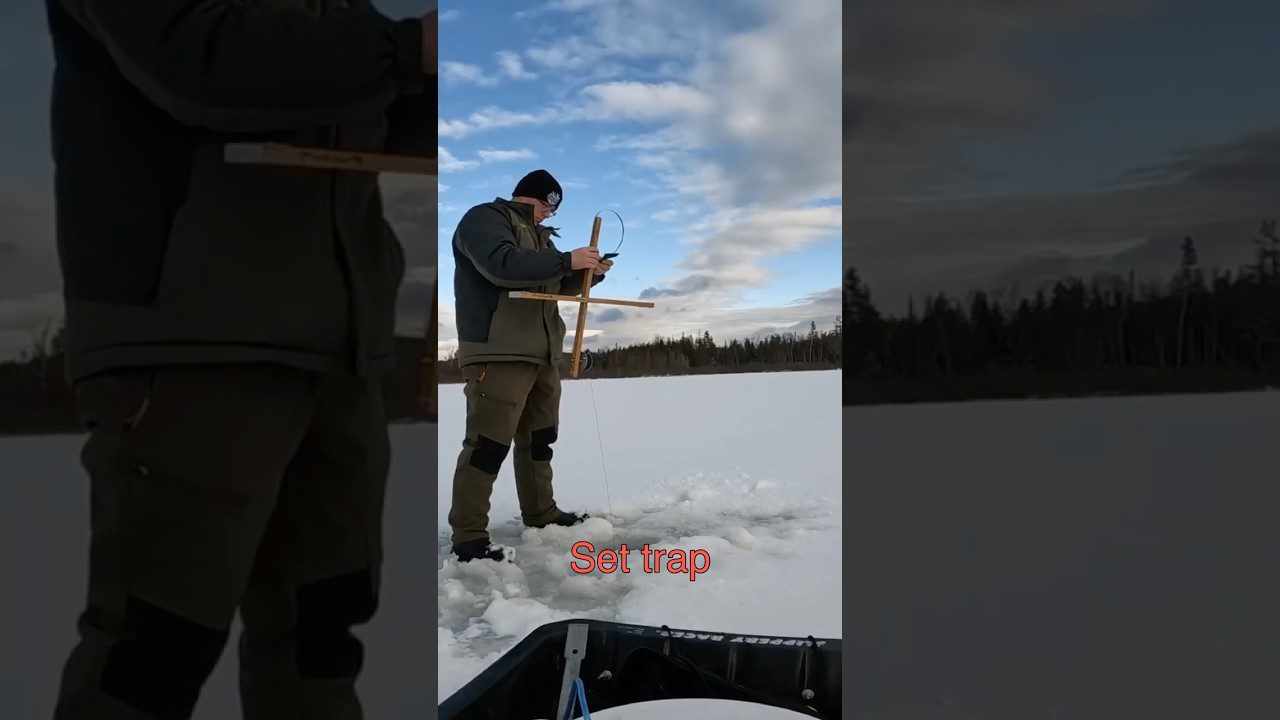
A proper ice fishing trap setup is the absolute bedrock of a successful day on the hardwater; it’s the difference between telling stories about the one that got away and hauling a monster togue through the ice. We’ve seen countless anglers get the big picture right but miss the small details that truly matter. It’s not complicated, but doing it right, every single time, is a discipline.
It Starts with the Basics
That quick video shows you the motions, but the thinking behind it is what counts. We’re using a classic wooden trap here—the kind your grandfather probably used. They’re simple, reliable, and they just plain work. There’s no fancy electronics to fail in the bitter cold. The key is ensuring your spool is free of ice and spins without a hitch. A sticky spool means a dropped bait and a spooked fish.
The Art of Baiting
Notice how the shiner is hooked just below the dorsal fin, above the spine. This is critical. Hooking it here allows the baitfish to swim as naturally as possible and keeps it alive and kicking longer. A lively bait is an irresistible target. Some folks hook ‘em through the lips, which can work, but for a long day of soaking baits, the dorsal hook is my go-to method. This part of your ice fishing trap setup can’t be overlooked.
Finding the Strike Zone
Once baited, the next step is finding the right depth. Don’t just guess. I always start by clipping a sounder (a simple lead weight) to the hook and letting it hit bottom. I’ll then reel up a foot or two. This puts your bait right in the cruising lane for lake trout (togue), which often hug the bottom. For brookies or salmon, you might come up higher in the water column. Knowing your target species is key to a productive ice fishing trap setup.
Here’s a quick checklist for a perfect setup:
- Check Your Gear: Ensure the spool is clean and the trigger mechanism is smooth.
- Bait Smart: Hook your shiner below the dorsal fin for maximum life and natural movement.
- Know Your Depth: Sound the bottom and adjust your line to target specific species.
- Set the Trigger: Place the flag arm securely under the trip wire. It should be sensitive enough to pop on a light bite, but not so light that the wind sets it off.
Mastering this basic ice fishing trap setup is a core skill for any serious angler. Before you head out, always double-check the regulations for the specific body of water you’re on. The rules on our heritage waters can vary, so consult the official lawbook from the Maine Dept of Inland Fisheries & Wildlife.
Getting these fundamentals right will lead to more flags, guaranteed. It’s the foundation of a great day of ice fishing, whether you’re on a small pond or one of Maine’s vast lakes.
Ready to put these tips to the test on some of Central Maine’s most productive hardwater? Stop guessing and start catching. Book a guided ice fishing trip with us and we’ll handle the gear, the bait, and put you on the fish.
From the Field
More From Our Guides
 Two-Minute Tips: Mastering Basic Scent Control for HuntingRead the article →
 Map and Compass Basics: How to Orient a Map and Take a BearingRead the article →
 Compass Basics: The Parts of a Compass and Magnetic vs. True NorthRead the article →
 How to Prep Your Ice Fishing Traps Before First IceRead the article →