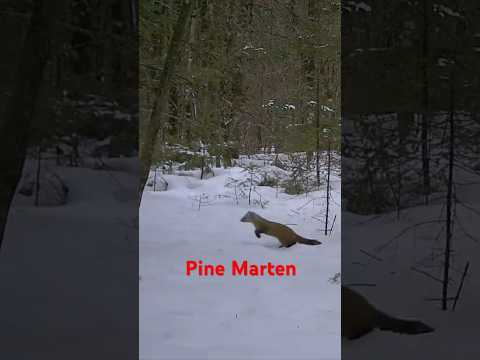
The pine marten in Maine is a true ghost of the big woods, a phantom that many folks spend a lifetime outdoors and never get a clean look at. They’re quick, secretive, and perfectly built for life in the dense spruce-fir forests we call home. Seeing one move, especially in deep snow, is a reminder of how tough and specialized our North Woods critters truly are. It’s a sight that gets the blood pumping for any trapper, hunter, or wildlife enthusiast.

Built for the Deep Snow
Just watch that video. That marten isn’t struggling; it’s thriving. They have large, furred feet that act like snowshoes, allowing them to stay on top of the powder where other predators would sink. This gives them a huge advantage when chasing down red squirrels, their primary food source, or evading predators like fisher or coyotes. They move with a bounding, almost joyful energy that’s just plain impressive to witness.
When you’re out on a late-season deer hunting trip or just enjoying one of our quiet nature hikes, keep your eyes peeled. You’re more likely to see their tracks than the animal itself. Look for paired prints, about 2-3 inches wide, bounding from the base of one conifer to the next. The presence of a healthy pine marten in Maine is a great sign of a healthy, mature forest ecosystem.
A Prized Furbearer
For those of us who run a trapline, the pine marten holds a special place. Their fur is soft, dense, and valuable, but the real prize is the challenge. Outsmarting a marten requires a deep understanding of the woods and the animal’s habits. It’s about woodsmanship, not just setting traps. You have to read the landscape, find their travel corridors, and present a set that is both effective and humane.
Key things to know about the pine marten in Maine:
- Habitat: They thrive in mature coniferous or mixed-wood forests with plenty of overhead cover and complex structures like fallen logs and snags.
- Diet: Primarily red squirrels, but they also eat mice, voles, snowshoe hare, birds, and berries.
- Curiosity: They are incredibly curious animals, a trait that can be used to a trapper’s advantage but also makes them a wonder to observe in the wild.
Respect and Regulation
Managing this resource is a responsibility we take seriously. Maine has a long, proud history of sustainable trapping that ensures healthy populations for generations to come. The season dates and regulations are carefully set by the Maine Department of Inland Fisheries & Wildlife to maintain that balance. It’s this careful management that allows us to continue the heritage of pursuing the elusive pine marten in Maine, an animal that defines the wildness of our state.
Whether you’re looking to learn the art of the trapline or just want a chance to see one of these incredible animals in its natural habitat, the deep woods of Central Maine are the place to be. There’s nothing quite like the thrill of seeing that flash of dark fur against the white snow.
Ready to learn the secrets of the North Maine Woods trapline? Book a guided trapping adventure with us and experience the challenge and heritage firsthand.
Comments are closed