

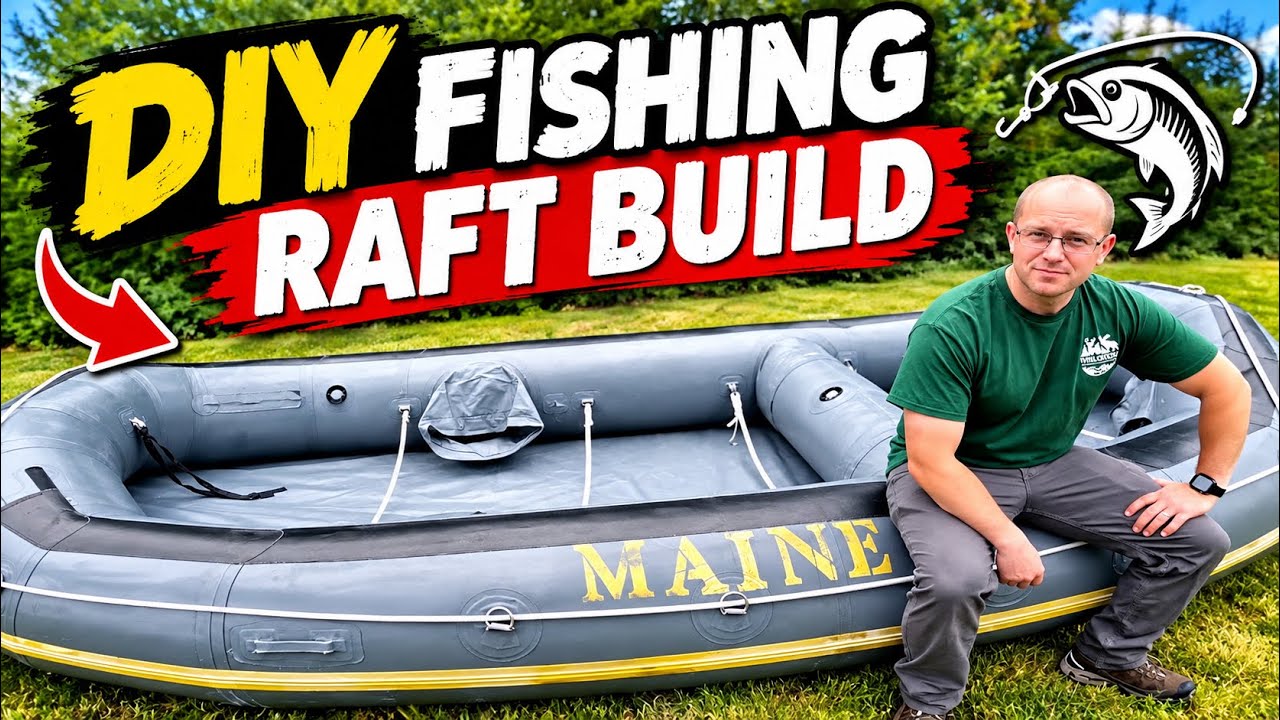
A successful DIY fishing raft build all comes down to one thing: meticulous planning. Over my 30 years guiding in the Maine North Woods, I’ve learned that the work you do before you pick up a tool is what separates a functional, fish-slaying machine from a floating headache. It’s about thinking through every cast, every piece of gear, and every possible scenario you’ll face on the water.
Measure Twice, Weld Once: The Blueprint Phase
As you can see in the video, I’m still in the chalk-on-the-floor phase. This is the most important part of any DIY fishing raft build. I’m mapping out the frame, the pontoons, the cooler placements—everything. Rushing this stage is the quickest way to waste time and expensive materials. You have to visualize yourself out there, maybe on a long river float fishing trip down the Penobscot, and ask yourself: where does everything need to be for maximum efficiency and comfort?
The Foundation: Frame & Pontoons
Your frame is the skeleton. It has to be bombproof. I’m building mine from steel for durability, but aluminum is another option. The key is planning the dimensions around your core components. In my case, it’s the coolers and the pontoons. Everything builds off that foundation. You need to know their exact measurements before you make your first cut. This isn’t just about fitting things in; it’s about balance and weight distribution, which is critical for how the raft handles in current.
Function Over Form: The Angler’s Layout
This raft is being built for one purpose: to be a hyper-efficient fishing platform. That means every inch of space is considered. Here are the key questions I’m asking myself during this stage of the DIY fishing raft build:
- Casting Room: Can I comfortably cast a fly rod from the front and back without snagging on gear or another person? This is crucial for both fly fishing and spin casting.
- Gear Access: How quickly can I get to my net? Where do the rods go when I’m rowing? Is there a spot for a tackle bag that’s out of the way but easy to reach?
- Anchor System: A good anchor system is non-negotiable for holding in a productive run. Where will it mount? Is the rope path clear and safe?
Thinking through these details now prevents frustration on the water later. A well-planned raft lets you focus on the fish, not on fumbling with your equipment.
Maine-Proofing Your Build
Building a raft for Maine’s heritage waters means preparing for anything. Our rivers can be bony and unforgiving. That’s why durability is paramount in this DIY fishing raft build. It’s also why it’s so important to be familiar with the regulations for any body of water you plan to float. Always check with the Maine Dept of Inland Fisheries & Wildlife before you launch a new craft to ensure you’re compliant with all boating and fishing laws. This planning extends beyond the build itself and into how you’ll use it responsibly.
Final Thoughts on the Plan
This project is a labor of love, but it’s a practical one. A custom DIY fishing raft build allows you to create the perfect tool for the job. By taking the time to plan every detail, from the main frame to the smallest bracket, you ensure the final product will serve you well for years of adventures. It’s the same philosophy we apply to our guided trips—preparation is the key to success. A solid plan for a DIY fishing raft build is everything.
Planning a build like this takes time. If you’d rather spend that time on the water, let us handle the gear and the guiding. We have the boats and the expertise to put you on the fish. Book your Guided River Float Fishing trip with us today!
From the Field
More From Our Guides
 Master Maine Grouse Hunting: Opening Day Tips from a Maine GuideRead the article →
 The Unforgettable Thrill of a Maine Grouse StruttingRead the article →
 The Unforgettable Thrill of a Maine Bull Moose EncounterRead the article →
 The Unforgettable Success of a Youth’s First Maine Bull Moose HuntRead the article →