

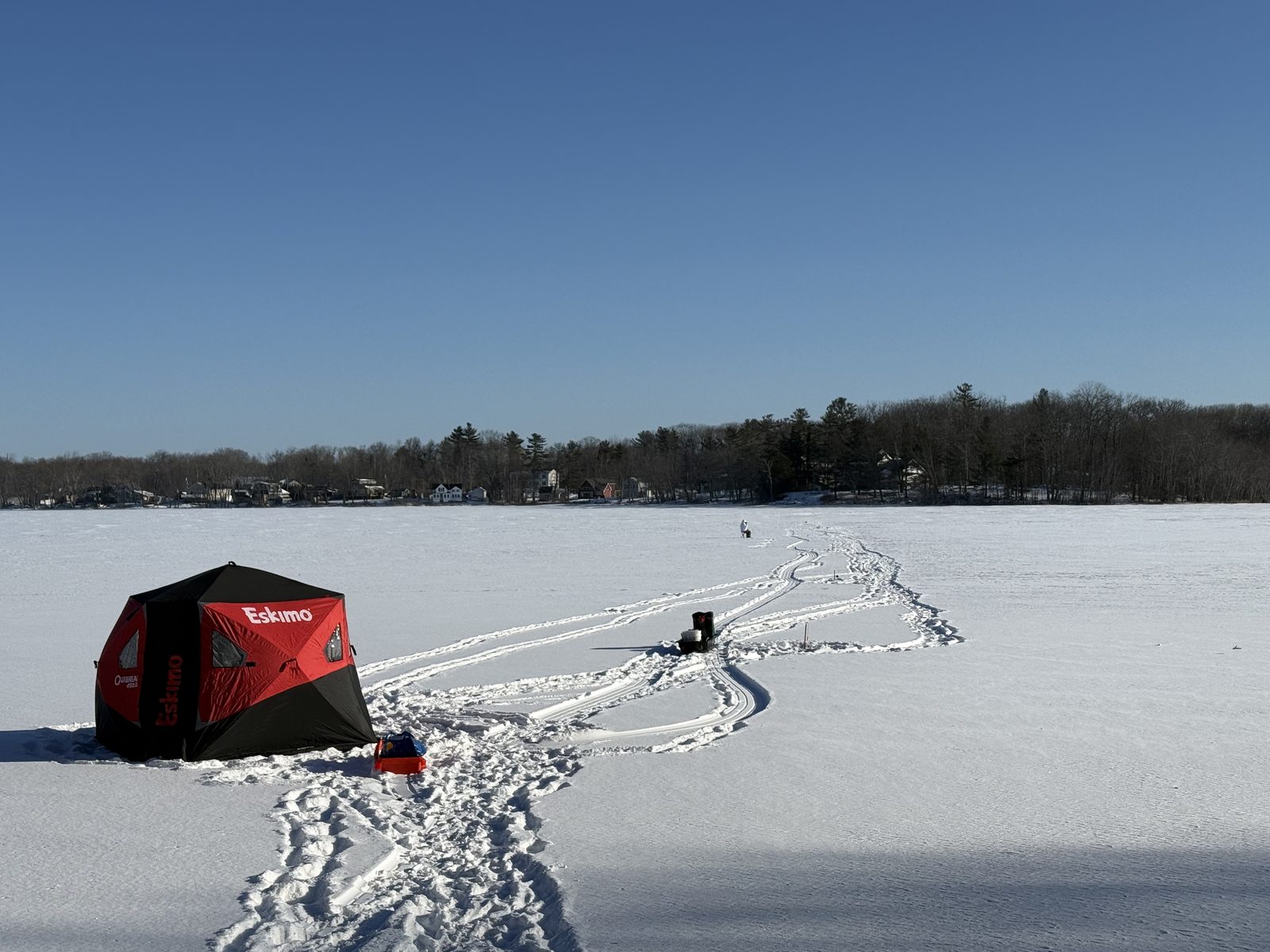
Ice fishing in Maine is the season most people underrate. The crowds are gone, the fish are still eating, and a shack on a frozen pond with a few traps set is about as good as a winter day gets. This is our guide to it — where to go, what you can catch, what gear you actually need, and how to stay safe out there.
When the season runs
Maine ice fishing generally gets going once first ice sets in, which in Central Maine usually means late December into January, and runs through to the end of March on most waters. Some lakes and ponds are open year round, others have specific open dates, and the rules differ between the north and south zones.
Do not take our word for the dates. Check the current rules with the Maine Department of Inland Fisheries and Wildlife for the water you plan to fish, and have a look at our summary of Maine hunting and fishing season dates.
Ice safety, briefly and seriously
No fish is worth going through the ice for. The general rule published by state agencies is a minimum of four inches of new, clear, solid ice before you walk on it, more for a sled or a vehicle. But that is a starting point, not a guarantee.
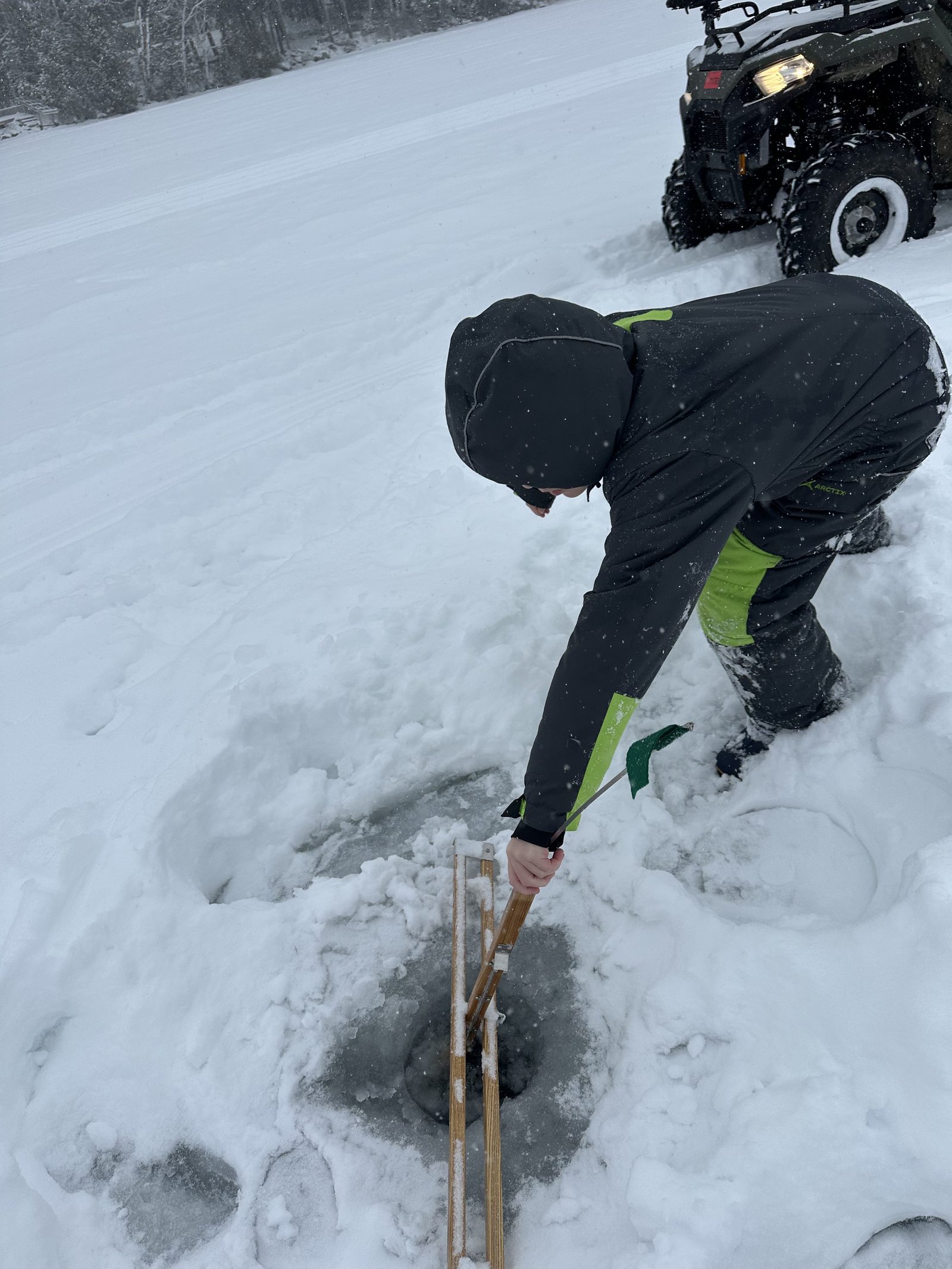
Ice is never uniform. Current, springs, inlets, outlets and pressure ridges all thin it, and a pond that is safe at one end can be dangerous at the other. Early and late season are the riskiest times. If you are new to it, go with somebody who knows the water.
Ice fishing the Belgrade Lakes
The Belgrade Lakes chain is our home water and where most of our winter trips run. Great Pond, Long Pond and Salmon Lake all fish well through the hardwater season, and the chain is big enough that there is always somewhere out of the wind.
Ice fishing Messalonskee Lake
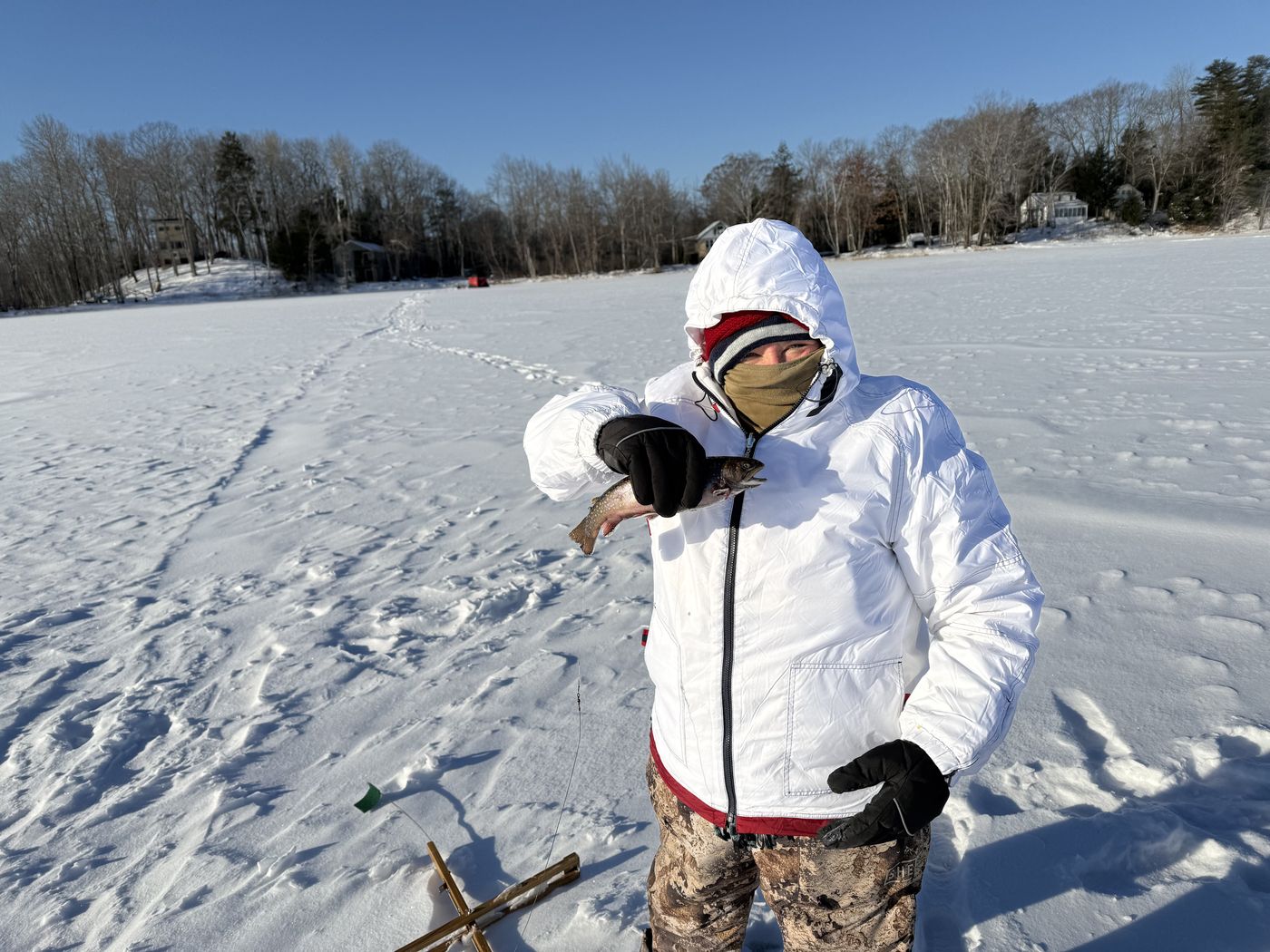
Messalonskee sits just north of Augusta and is one of the most productive winter waters in Central Maine. It is long, deep in places and holds a genuinely mixed bag — salmon and trout in the deeper water, pike and bass closer to the weed edges. If you only fish one lake near Oakland in February, make it this one.
Cobbosseecontee, west of Augusta, is the other one worth knowing, particularly for bass. Beyond those, there is a lot of smaller water around Oakland, Waterville and Augusta that never sees much pressure.
What you can catch through the ice
Central Maine gives you a genuinely varied hardwater season. Each of these has its own habits, its own depth, and its own way of being caught, so we have written them up separately:
- Brook trout — the one most people come for. Shallower than you would expect, and worth the early start.
- Landlocked salmon — harder won, and the best fight you will get through a hole in the ice.
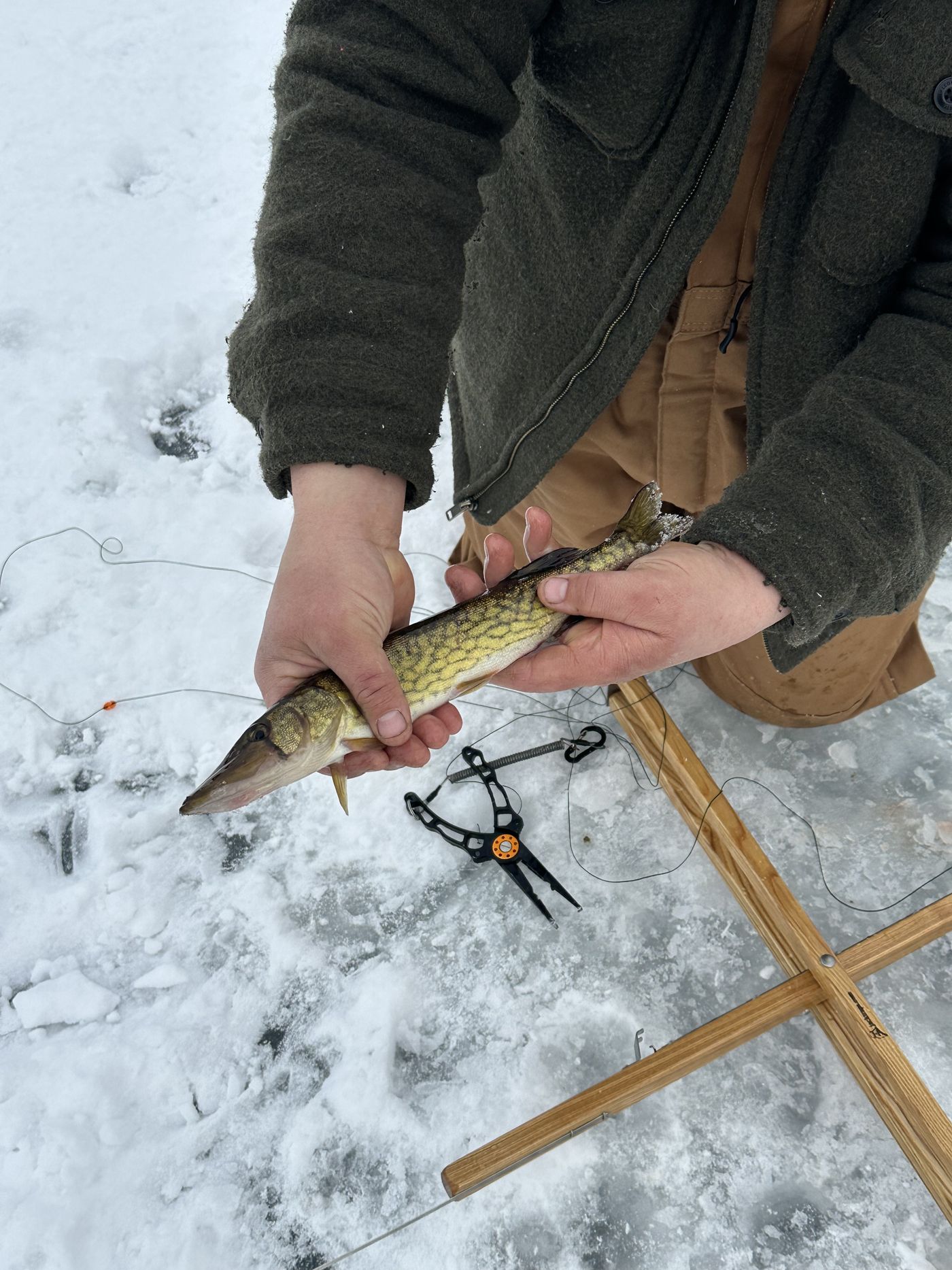
- Chain pickerel — underrated, aggressive, and a brilliant fish to put a child on because they actually bite.
- Crappie — find the school and you can have a very fast afternoon.
- Largemouth bass — most people do not think of bass in winter. They should.
Gear, and getting your traps right
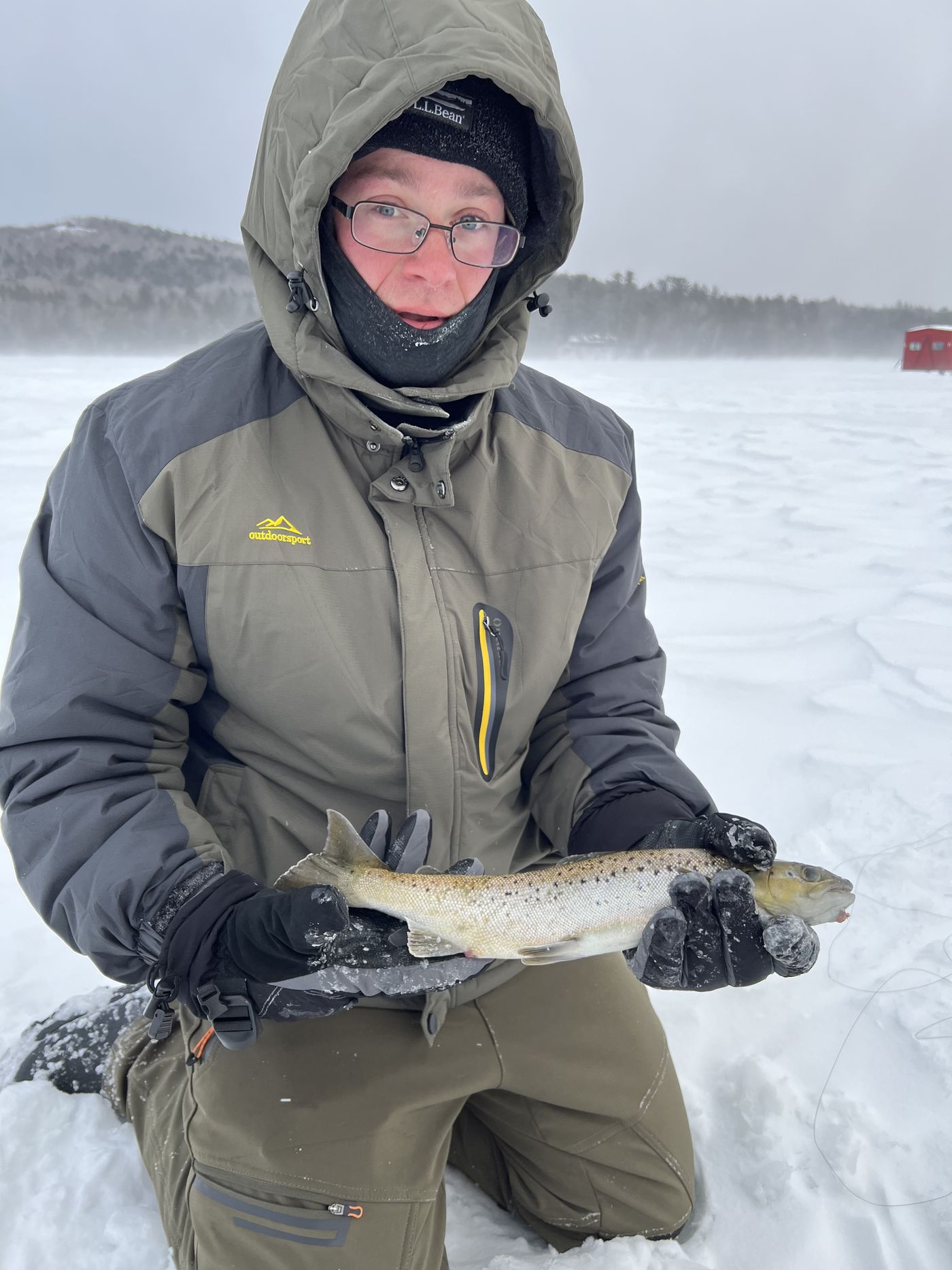
You do not need much to start, but what you do need has to work in the cold. If you are new to the hardwater, start here:
- Ice fishing basics — gear, clothing and safety for beginners. Read this one first.
- Prepping your traps before first ice — done in the warm, in November, not with cold hands in January.
- Baiting your trap hooks — the small details that decide whether a flag turns into a fish.
Bringing the family, and the dog
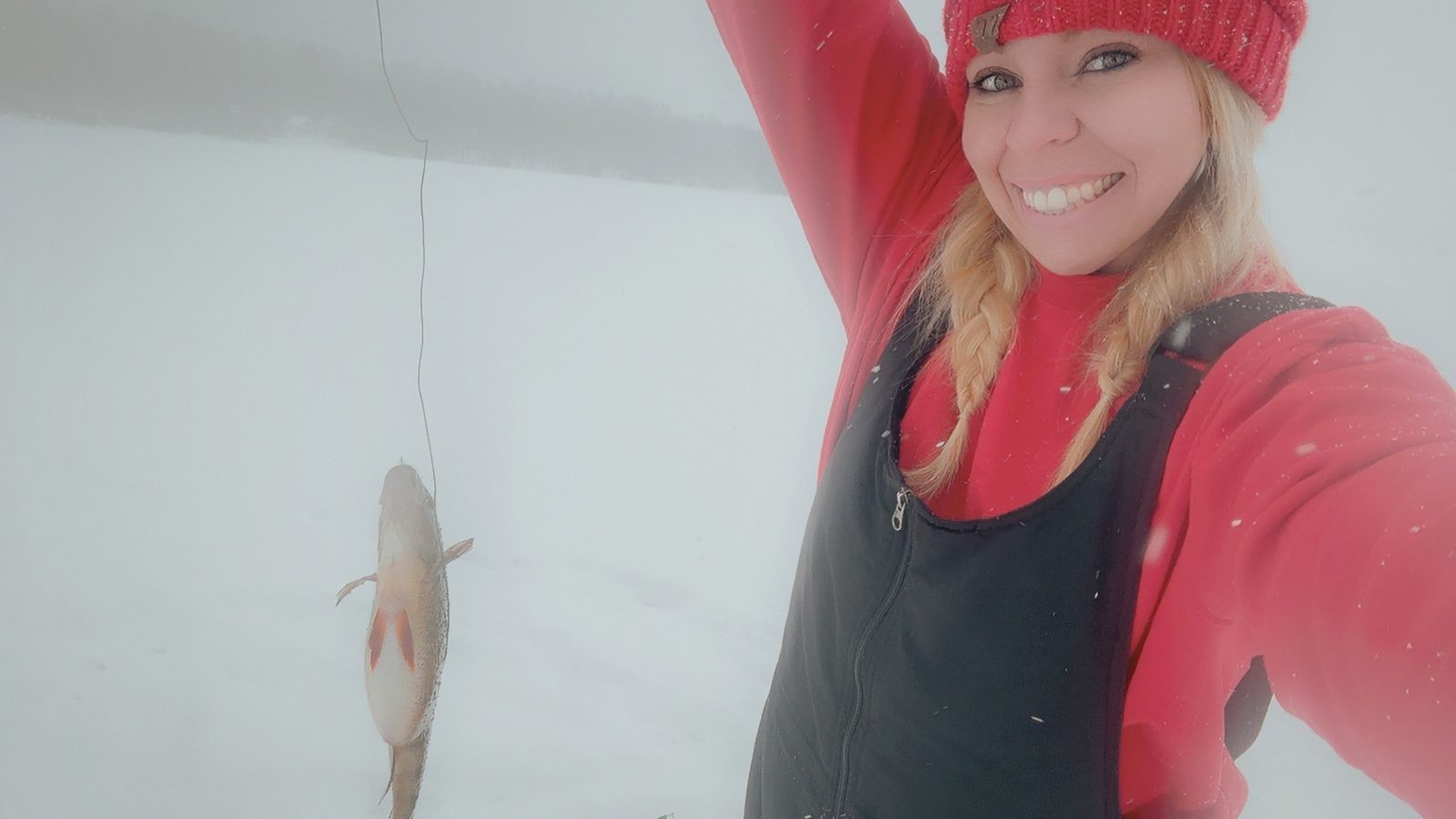
Ice fishing is the most family-friendly fishing there is. Nobody has to cast, there is room to move about, and the waiting between flags is half the point. Children who would be bored stiff in a boat tend to love it.
Dogs too, within reason — we wrote up what to think about before bringing a dog out on the ice, because there are a few things that catch people out.
If you are coming from away and want a base, our guides to Belgrade, Oakland and Augusta cover where to eat and stay.
Going out with a guide
You can absolutely do this yourself, and plenty of the pages above are written to help you do exactly that. But if you are short on time, new to the ice, or want somebody else to have drilled the holes and set the traps before you arrive, that is what we do.
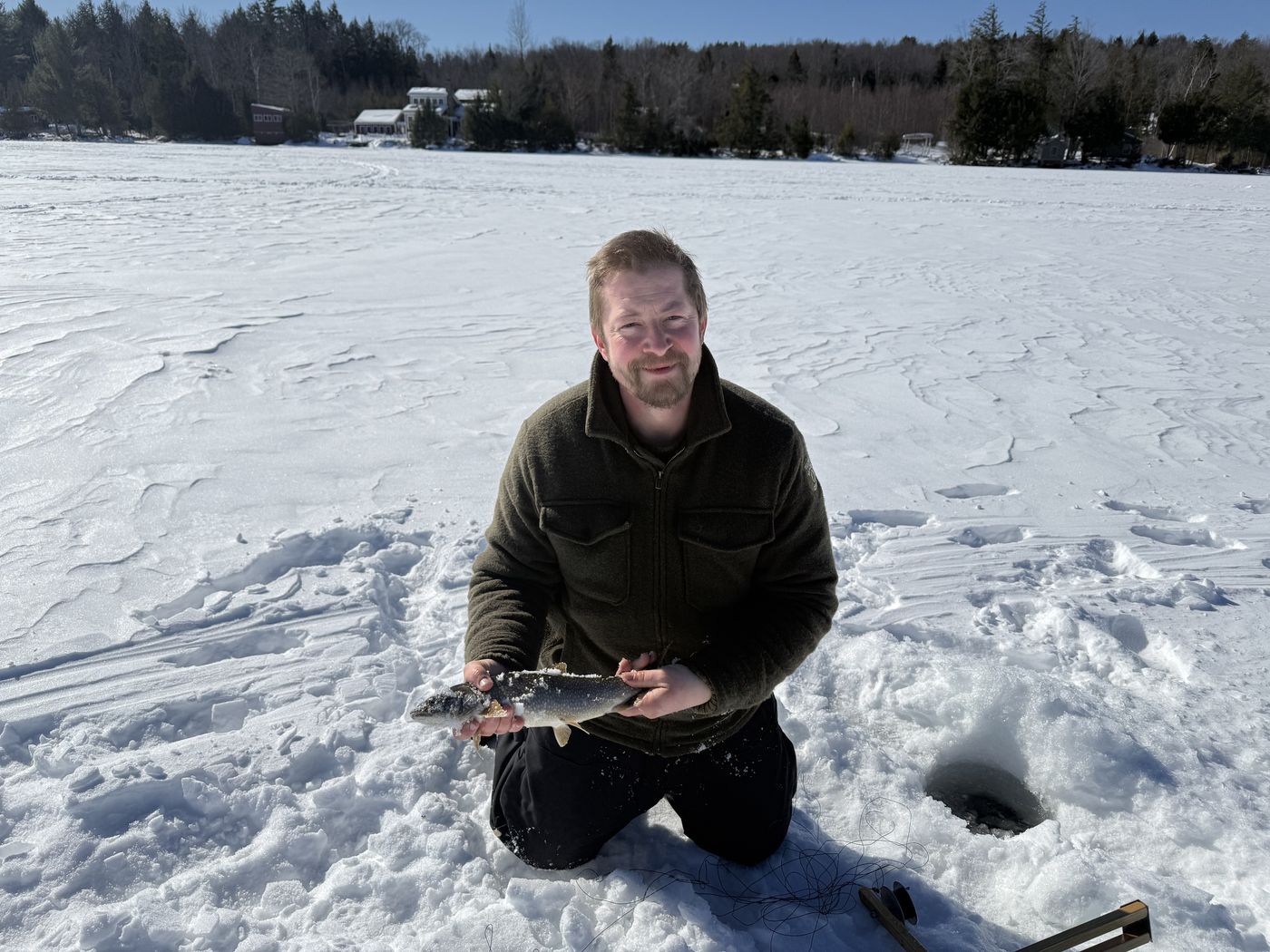
Our guided Maine ice fishing trips run through the hardwater season with heated shelters, bait, traps and tackle provided. We read the ice, we know which ponds are fishing, and you turn up and fish.
The rest of our guided Maine fishing trips run once the ice goes out, if you would rather wait for open water.
Maine ice fishing: common questions
How thick does the ice need to be?
Four inches of new, clear, solid ice is the usual published minimum for walking on. More for a sled, considerably more for a vehicle. Treat it as a floor rather than a target, and remember that thickness varies across a single pond.
When is the best time to go?
Mid-January through February is the sweet spot in Central Maine — the ice is reliable and the fish are settled into winter patterns. First ice can be excellent but needs care, and late March gets unpredictable.
What do I need to bring?
On a guided trip, bring warm layers, waterproof boots, gloves, sunglasses and a fishing licence. We provide the shelter, heat, traps, bait and tackle. Bring a flask and more socks than you think you need.
Do I need a fishing licence?
Yes, if you are 16 or over. Licences are available online from Maine Inland Fisheries and Wildlife, and you can buy a short-term one if you are visiting.
Can children come?
Yes, and ice fishing suits them better than almost any other kind of fishing. There is room to move, nothing to cast, and pickerel and perch bite often enough to keep attention. Children under 16 do not need a licence.
What can you actually catch?
Depending on the water: brook trout, landlocked salmon, brown trout, lake trout, chain pickerel, crappie, perch, pike and largemouth bass. Tell us what you would like to target and we will pick the pond accordingly.
What happens if the ice is not safe?
We do not go. Conditions decide, not the calendar, and we would rather move a date than put anyone on ice we are not confident about.
From the Field
More From Our Guides
 The Critical Mistake to Avoid in Your DIY Fishing Raft RepairRead the article →
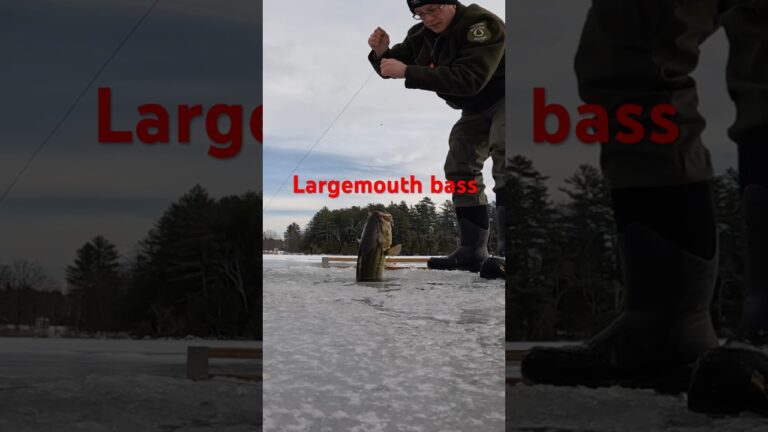 The Unexpected Thrill of Landing a Winter Largemouth BassRead the article →
 The Maine Shad Run: When It Happens and How to Fish ItRead the article →
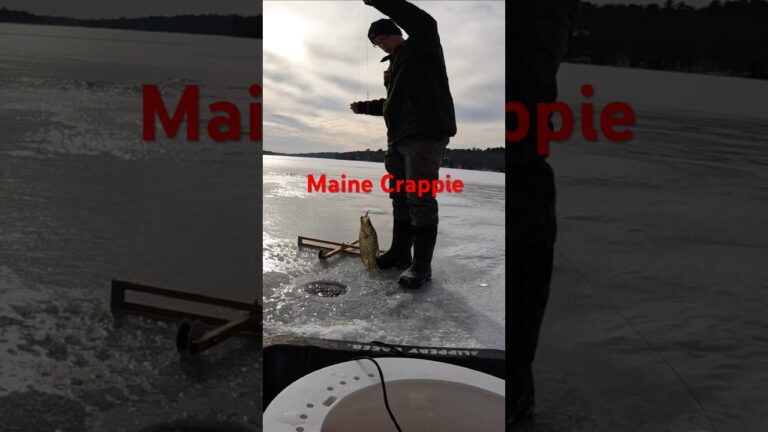 The Thrill of Ice Fishing for Crappie: Landing Slabs on the HardwaterRead the article →